

Can You Legally Put A Car In A Storage Unit?

If you've noticed a wave of self-storage facilities popping up everywhere over the last few years, you're not wrong. This boom is predicated on economic uncertainty, urbanization, and a global population increase. When life throws a random curveball, it's always good to have the option to put your belongings in one of these secure, off-site storage locations, even if it's just for a little while. Knowing you have a safety net option is reassuring to many. And if you're like millions of people who live in an apartment or condo without a garage, you may be wondering if parking in one of these storage units is an option.
Believe it or not, yes, you can park a car, ATV, or even a small boat inside a storage unit. These units are also a good place to store a motorcycle during the winter. But it all depends on the policy of the individual storage company you want to use, because not all of them do. Thankfully, there are many to choose from, with more coming, as the industry in the U.S. is expected to grow from $44.37 billion to $49.88 billion by 2029. Globally, the market is projected to hit $85.27 billion by 2030 (up from $54 billion in 2021).
You can legally store a vehicle inside a storage unit for as long as the facility allows it and you keep paying the rental fees. The key to keeping it there safely and securely is to abide by their policy — to the letter. At a bare minimum, most require the vehicle to be insured, registered, and the license plate tag kept up to date.
Be sure to follow the rules
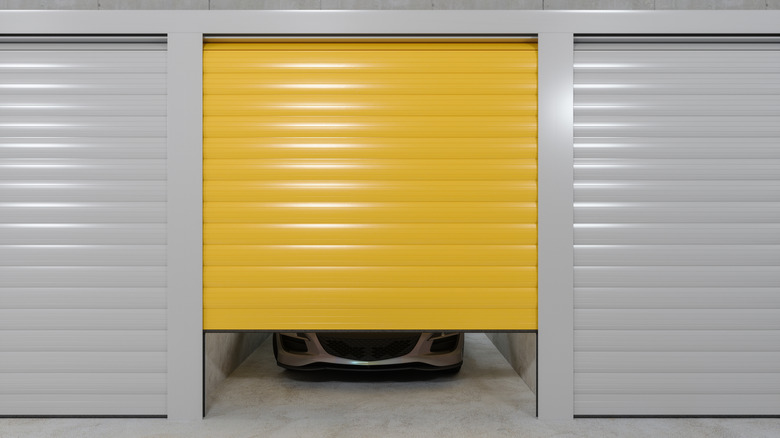
Perhaps HOA regulations prohibit you from parking your classic muscle car in the driveway or on the street in front of your home. Or maybe you're in the military, heading out on deployment, and don't want your car sitting around in the open while you're gone.
Before stashing your ride at one of these facilities, there are a few things you'll need to do. First, clean the vehicle inside and out. Bird droppings, road tar, salt, and other residue can all wreak havoc on a paint job if left unattended. If your car has become a veritable dumpster, be sure to clean up what's left of your late-night taco binges because if you don't, rodents or bugs could get inside and do a number on the interior.
Vehicles must be in good running condition and driven into the unit, not towed. Most companies frown on major mechanical repairs once on-site. Make sure tires are in good shape (i.e., no dry rot) and properly inflated. In fact, stored tires (even if they're not on the vehicle) can develop issues over time, so putting the vehicle up on jack stands to keep flat spots from developing is advised. It's also best to have as little fuel in the tank as possible (for fire safety reasons). Certain car features can drain the battery, so disconnecting it will help it from being dead upon your return. Again, each storage facility has different rules and regulations, so be sure you read and understand all the fine print.