

5 Parking Lot Etiquette Rules Every Driver Should Follow
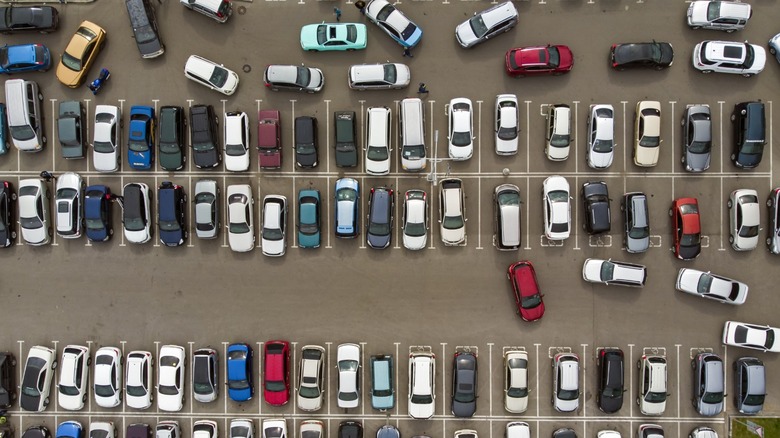
Driving a car means dealing with parking lots, especially if you're going to a public place. And given the number of cars and drivers on the road, you've probably already seen or heard lots of parking lot drama (or maybe even been a part of it). While we cannot change how other people think or act, one way we can avoid issues while trying to get to our destination is to practice parking lot etiquette.
Even though many parking lots are built on private property and not following minor traffic rules and etiquette might not get you an infraction (especially if the lot is not publicly accessible), it's still prudent to follow them. Doing so can help keep things predictable, avoiding any unpleasant surprises, especially around other drivers. So, whether you're a new driver still figuring out the best way to act in a crowded parking lot or an experienced one looking to refresh your memory, these are some of the most important parking etiquette rules every driver should follow. While they may not be enforced by law, following these will help avoid hassling other drivers and prevent tempers from flaring up.
First car, first served

Finding an empty parking spot can become a competition in a crowded lot with several cars looking to score an open space. This has led to some drivers making a companion stand up to reserve a spot, or quickly backing into a space where someone is already waiting.
While a driver might feel crafty for making their passenger block a space for them, it's infuriating to other drivers who already have their vehicles ready to go in — after all, a parking spot is for vehicles, not people. It can also put the person in danger, especially if a large vehicle is backing into the spot and fails to see them. Some states also do not allow reserving parking spots, whether by having someone stand on them or placing illegal traffic cones and other objects. While state rules and city ordinances usually apply to public parking only, it's only sensible to follow them in private lots, too.
Drivers should also look around before entering a spot to see if someone has already been waiting for it. There's no law against overtaking someone to a parking spot, but it makes you a jerk. It can also be pretty reckless, as the driver who's already first in line might get surprised by a speeding vehicle suddenly zooming into the spot, resulting in a fender bender. Things like that can escalate into arguments or worse, so it's best to avoid that and just let the first car to get to an empty or about to be vacated spot take it.
Follow traffic rules
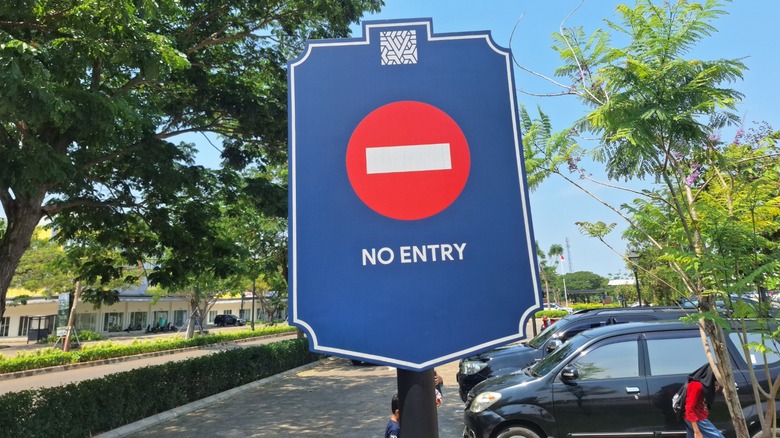
It's always wise to follow traffic rules while driving, especially in the narrow thoroughfares of tight parking lots, where lane markings and directional arrows help prevent grid lock and make it easier for everyone to navigate the area. Even though it might be tempting to go against the flow of traffic in a parking lot if you spot an open space at the end of the corridor, doing so could lead to blocked traffic, or worse, an accident.
Another thing you should follow is the posted speed limit. Zooming around in a parking lot is dangerous, with cars entering and exiting parking spaces and people walking around. Parked vehicles might not be able to see an oncoming car, especially if it's still pretty far off. This could lead to them pulling out in front of you as you approach, and if you're going too fast, you might not brake in time, causing in a collision.
Traffic rules also apply to pedestrians, too. Some parking lots lay out pathways for walking. While it might be more convenient to cross the road to get to your car or even walk on the space for cars, it's best if pedestrians stick to the designated walkways, if available, when heading to and from their vehicles. This helps keep cars and people separate, reducing the risk of accidents. A few car parks even implement yellow poles for pedestrian walkways to help keep you safe in case a driver loses control.
Park in the proper spot
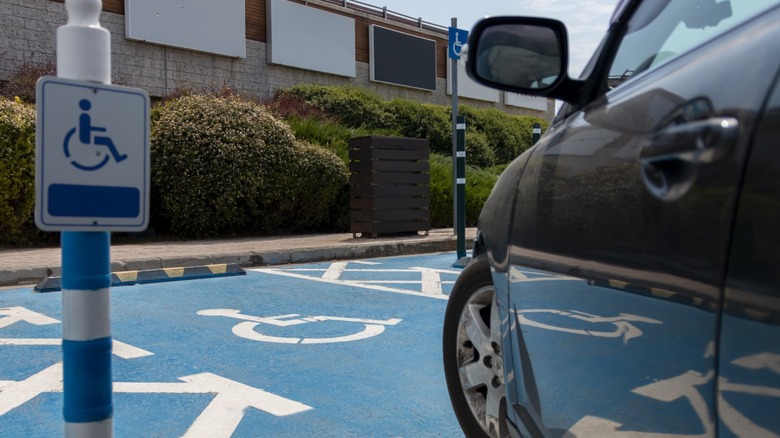
It can get frustrating if you finally find an empty spot only to find that you're not allowed to park there. Maybe it's a designated slot for persons with disabilities and you're not eligible. Maybe the spot is reserved for employees only. Or maybe you're driving one of the largest pickup trucks you can get, and it just won't fit in the space you found. No matter the issue, you shouldn't leave your car improperly parked.
When you park in an accessible parking spot and do not need it, you're depriving someone that needs the extra space to enter and exit their vehicle. Even if you think you won't be long, a person with a disability might be forced to park in an ordinary spot should they see that the designated spot isn't open and have extra difficulty getting out of their car because of that.
This also rings true for other types of reserved parking. Even if a spot is empty, you should not park there, especially if it's legally and clearly marked for someone else — whether for a group of people (like employees or customers of an establishment) or an individual. It's likely because the business or person has paid for the spot, and parking on it without their express authority is akin to stealing it.
And even if you finally find an empty space to park your car in, you should ensure that your vehicle would fit inside it. Otherwise, you may end up with the rear of your truck blocking the road and making it difficult for other cars to pass you.
Don't block traffic, access points, and other vehicles
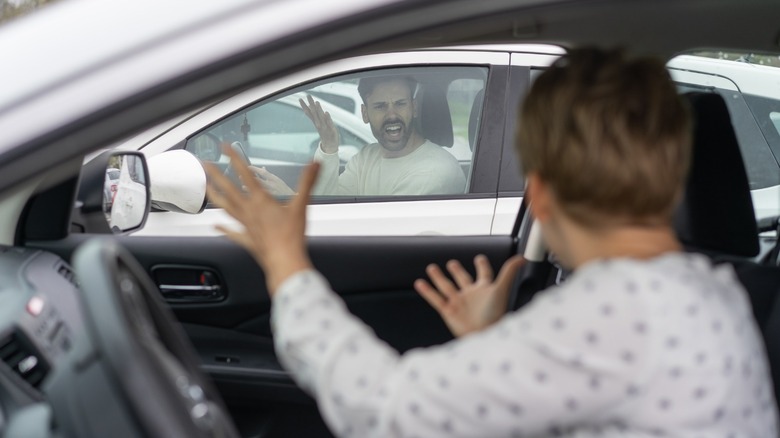
Aside from blocking traffic flow with a vehicle that does not fit in a parking spot, there are other ways that you can block traffic in a car park. For example, you could be waiting for your passengers in the loading and unloading zone, which means that you are blocking other vehicles who have their passengers ready to jump into their cars. My rule of thumb is that people should be waiting for cars in these areas, not the other way around.
You also should be aware of access points when you're parking — exits, entrances, and ramps. Parking your car near these areas could make it difficult for people to enter or exit. Aside from the added inconvenience, it can also be dangerous. After all, these areas are kept clear so people can easily leave in an emergency.
Lastly, don't just park your car in an empty space that could fit a vehicle. While it might be tempting to parallel park in front of an empty wall with perpendicular or diagonal parking spots on the other side, doing so could make it harder for drivers to maneuver their vehicles out of their spots. It could also be that you're so frustrated with the parking situation that you're just going to put your SUV on the sidewalk, especially if it's lifted and could easily go up it. Even though this is out of the way of other vehicles, you will make it harder for pedestrians to walk to their vehicles. So, unless a parking attendant specifically lets you park in an unmarked spot, just don't do it.
Stay within the parking lines
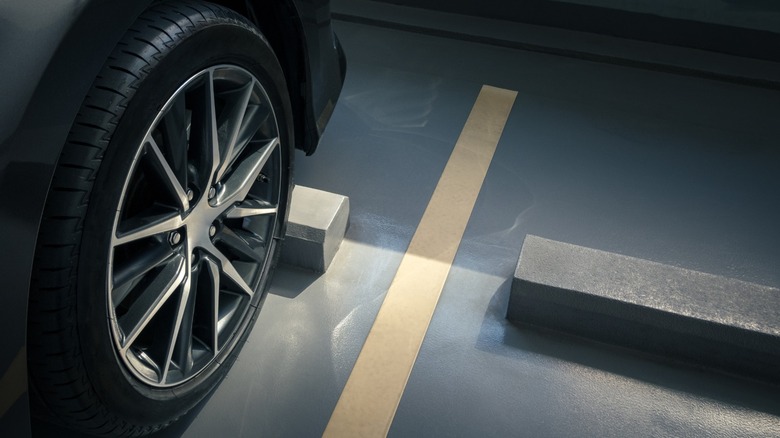
One may think that keeping your car within the painted lines for the parking spot is common sense, but drivers in a hurry tend to forget about these borders. While you don't have to place your vehicle exactly in the middle of the spot, you should still keep your tires within the lines. More importantly, you should leave some space on either side so people in vehicles around you can easily get in and out.
That's one of the things that I always look at when I park, ensuring that I don't encroach on other parking spots. That way, it makes it easier for other drivers to use them, and I also reduce the chances of getting scratched or dented while my car is unattended, damaging its pristine paint job and reducing its resale value. If another vehicle has crossed the line and is taking up too much space for you to be able to conveniently park within your lines, it's advisable that you just look for another spot instead of risking getting damaged by a careless passenger hitting your car with their door, or worse, getting keyed by an irate driver.
These parking etiquette tips will help keep things civilized, especially as parking spots are becoming a limited resource in congested urban areas. There are several other rules that we've thought about but haven't included, but they all revolve around the golden rule of doing unto others as you would have them do unto you — or, in parking terms, park as if you're parking beside your own car.