

This AI Designed An 843-Part Computer (And It Booted On The First Try)
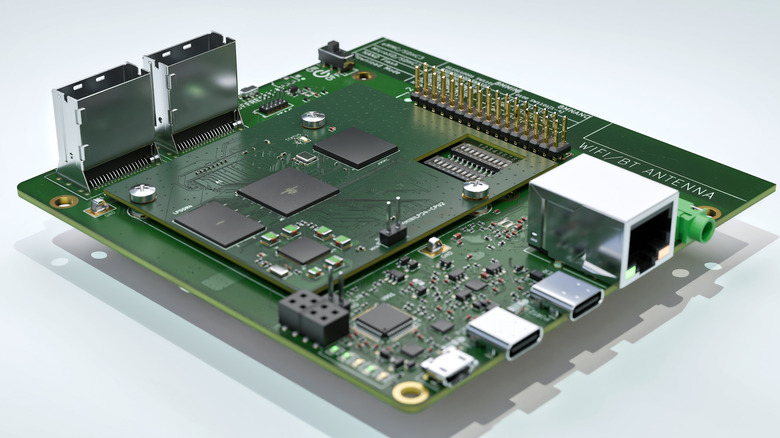
There are some weird ways people are using AI, and there are some ways of using it that make complete sense. In the latter case, it was only a matter of time before AI systems began to play a role in designing and building the digital machines that are capable of, well, running AI systems. A team at Quilter AI is leading the way, with its AI software tool specifically designed for the task. AI has already helped to design a CPU, now, it's helped design an entire computer — one that reportedly booted up at the first time of asking.
Using an AI-assisted design workflow, the company produced a fully functional computer made up of 843 individual components. Known as Project Speedrun, the computer lived up to its name in every sense. It went from concept to a fully running computer in less than a week — a task that the company says normally takes about three months.
This wasn't just a proof-of-concept computer either. It was a real, Linux-based computer spread across two printed circuit boards, and designed by a single engineer using Quilter's AI platform. The design of the computer didn't entirely remove the human from the loop. An engineer still defined the system's schematic, requirements, and constraints. What AI did do was to undertake the repetitive work. By handling the 'donkey work' of designing the layout and routing, AI enabled the building of a computer that became a reality in less time than a conventional hardware project would take to reach its first layout revision.
How AI helped design and build the computer
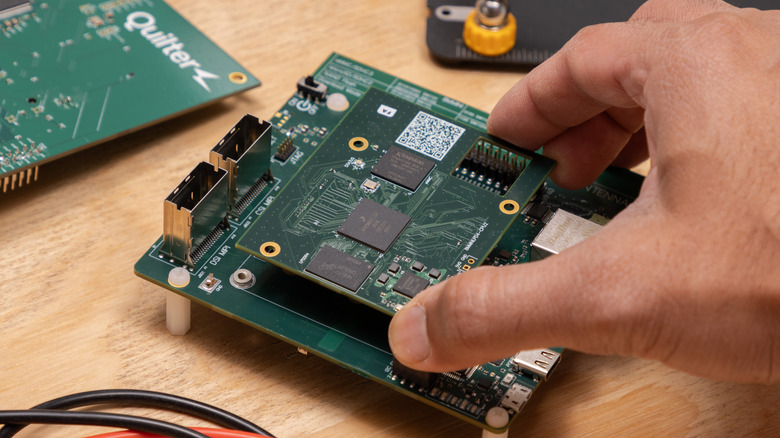
Most AI will need a human prompt before it does its stuff, and this project was no different. Before the AI was let loose, a human engineer had defined the system's schematic and selected all of the components. Additionally, humans also determined the electrical, physical, and manufacturing constraints the design had to meet. In other words, the AI didn't invent this from scratch. Rather, it was responding to a clear scenario laid down by human prompting. Okay, so these are more complex than your average ChatGPT prompt, but nevertheless, the underlying mechanics are similar.
Once the AI had completed the layout, the design was taken through a conventional PCB fabrication and board assembly process. Engineers then carried out a clean-up phase, making any minor adjustments that were deemed necessary. Importantly, Quilter claims that "this wasn't a rescue effort" — the core AI-generated layout remained intact with no need for major redesigns or rerouting. The 'polishing' took a mere 38.5 hours — for context, the company says that quoted time for a similar non-AI assisted build is 428 hours.
Once the design works were completed and the polish applied, Quilter's AI system had helped create a computer needing only a fraction of the resources and time that such a build would usually require. In this instance, the final result was a computer running an NXP i.MX 8M Mini Quad processor, 2 GB RAM, 32 GB storage, audio, video output, Ethernet, and a PCIe slot.
Why the first-boot success wasn't the end of the story
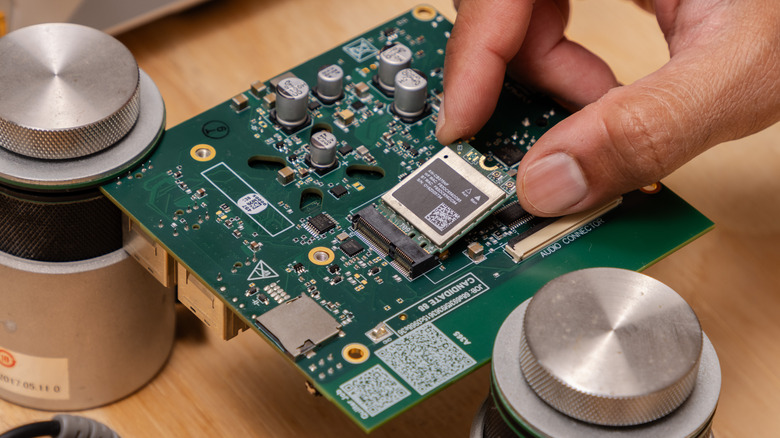
Quilter says its AI-designed computer booted on the very first try. In hardware development, that milestone alone is unusual — but it wasn't where the project stopped. While the success of the first boot certainly proved the concept, the Quilter team behind the project wanted to show that it could do more than just boot up — they wanted to demonstrate that this was a machine that was genuinely usable, rather than a computer that could turn on and that was about it.
After initial bring-up, the system was configured to run a full Linux environment, allowing the team to observe how the computer behaved when software began placing sustained demands on it. This is one of those stages that may cause engineers some strife; it's a point when many early-revision boards can fail, or show weak points. Typically, this is when subtle (or not so subtle) issues like power delivery, signal integrity, or unwanted thermal characteristics can all become apparent. According to Quilter, the AI-assisted boards operated as expected during this phase.
As noted, Quilter also wanted to demonstrate that this is a usable computer. During testing, it successfully ran YouTube, and games (AngryBots), as well as productivity suites including Google Meet and LibreOffice. Not bad for a machine that went from drawing board to first boot in less than a week and is the first computer designed by AI. While all the performance, testing, and development data came from Quilter itself, the outcome still points towards a future where AI participation in computer design is the norm.