

I Review Phones For A Living: Here Are My Top 5 All-Time Favorites
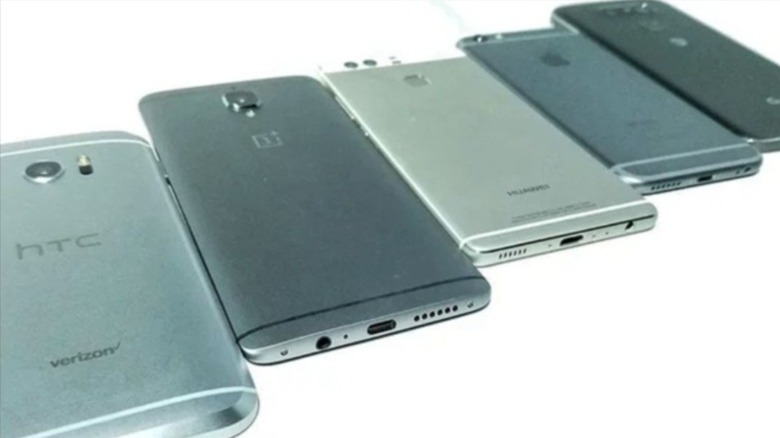
Every time I tell someone I review phones for a living, I'm often greeted with a surprised look. "Oh wow, so you get to use every new phone that comes out?" That's a standard question I get asked all the time. I've got to admit, it's definitely a fun job. I love cutting-edge technology, and being at the forefront of it is certainly a luxury I would hate to give up. As a reviewer, though, my job involves constantly switching between multiple new phones to test them out. Owing to this, I never really have a fixed daily driver. That said, some phones truly impress you and make you go "I wish I could go back to it," even after its review period is over. Having reviewed phones for over a decade now, I thought this was the best time to honor those standout models.
The phones on this list were shining beacons in a sea of ubiquitous metal and glass sandwiches, those that left a lasting impression and shaped the future of smartphones. Notably, these are phones I have personally used and loved, which means this list is completely subjective. While it was extremely challenging to pick five phones among the hundreds I've reviewed, I decided to choose those that valued user experience over raw specs, introduced new, breakthrough features that stayed on future phones for a while, and ones that I wish brands would relaunch in 2026 with updated internals. I would love to rock one of these in my pocket even today!
Samsung Galaxy S3
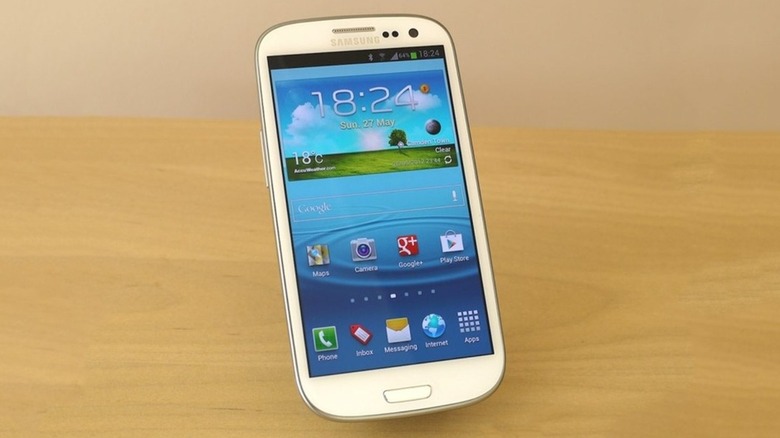
Samsung's Galaxy S series flagships are still widely regarded as some of the best Android phones you can buy. The Galaxy S25 Ultra, for example, is one of the most well-rounded phones that nails pretty much every aspect. Those who have been following Samsung's legacy would know that this has been the case right from the original Galaxy S. While every iteration since has introduced the latest specs and new features, there's one version in particular that stands out to date — the Galaxy S3. The pebble-inspired chassis fit perfectly in the hand when using the phone, while the subtle curves at the edges added a unique touch in a time when most phones had boxy corners. Apart from the design, the Galaxy S3 offered a gorgeous 4.8-inch Super AMOLED display — one of the largest panels in 2012.
Along with the attractive hardware, Samsung's TouchWiz interface was a big highlight of the Galaxy S3's user experience. The attractive icons, animated widgets, and a host of features made it one of the best Android UI skins in terms of functionality. The ripples on the lock screen when you swiped to unlock the phone were enough to grab anyone's attention when trying it out at a retailer. Speaking of the lock screen, how can anyone forget that iconic dandelion wallpaper of the S3? It was one of the first flagship phones I used, and it will always hold a soft spot.
Google Nexus 5
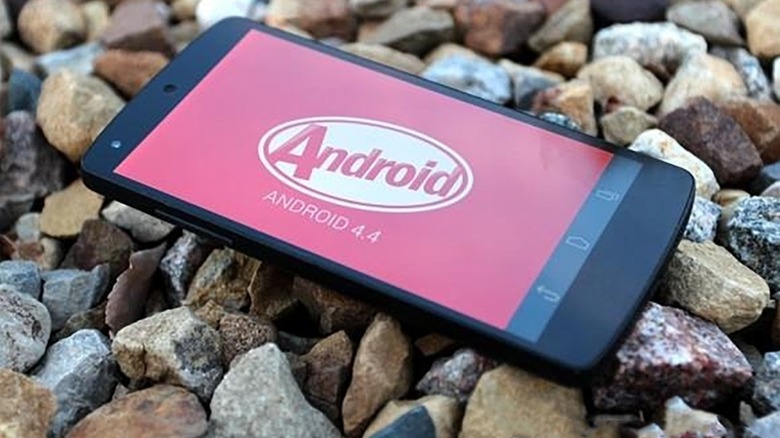
While Samsung relied on its unique design and hardware prowess for all the heavy lifting, the Google Nexus 5 took a completely different route. This was a time when Google did not have its own Pixel lineup, so it would partner with smartphone OEMs to launch phones under the Nexus branding (in the case of the Nexus 5, Google enlisted LG). These phones were essentially powered by Google's software — showcasing Android in its purest essence. The Nexus 5 ran what we commonly refer to as "stock Android." The phone did not have any custom skin on apps pre-installed apart from Google's services. If you wanted to experience the best of what Android had to offer, the Nexus 5 was the way to go. Apart from the software, a big reason why the Nexus 5 became so popular was the specs it offered for just $349.
The Nexus 5 had a large 4.95-inch 1080p display — a rarity at that time, especially in this price segment. Another rarity was the inclusion of the Qualcomm Snapdragon 800 — this powerful, flagship-grade chipset, coupled with the smooth Android OS, meant that the Nexus 5 excelled at performance. There was an 8MP camera on the rear with optical image stabilization, and the performance was respectable for the price. Additional features include wireless charging, NFC, and software updates straight from Google. Undeniably, Google's moat with the Nexus 5 was software, and it was enough to leave a lasting impression. Our review of the Google Pixel 5 found the handset was free of gimmicks, which makes me believe it was a spiritual successor to the Nexus 5.
Nokia Lumia 1020
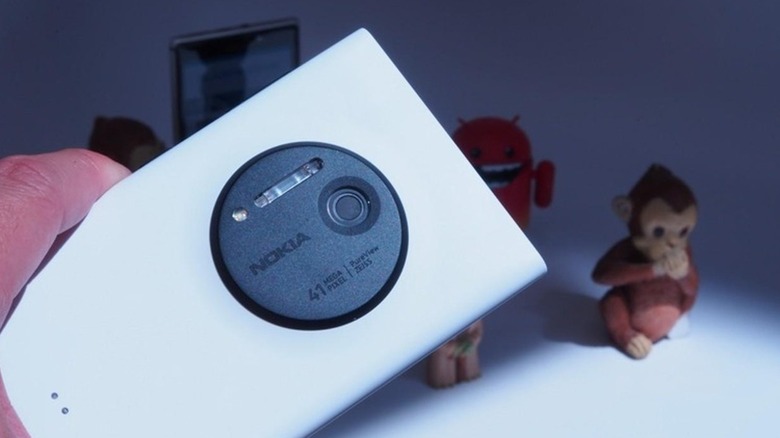
A quick glance at this list will tell you that Android is my favorite mobile operating system. However, there was a time I kept hunting for a Windows Phone launcher on the Google Play Store simply because I absolutely loved the Metro-style UI on Windows Lumia phones. The active tiles were super intuitive and ahead of their time, in my opinion. While the UI was excellent, it wasn't enough to convince me to switch to a Windows Phone as my daily driver. At least, until the Lumia 1020 arrived. To give you some context: I am an ardent smartphone photographer, so you'll find one of the best phone cameras of all time in my pocket. At a time when most phones had small 8MP or 12MP sensors, Nokia added a massive 41MP camera to the Lumia 1020. To make things better, it was paired with Zeiss optics.
The result? Easily the best smartphone pictures in 2013. Of course, Samsung also tried something similar with the Galaxy S4 Zoom. However, that was more of a camera that could also work like a phone, as opposed to the Lumia 1020, which wasn't unwieldy by any means. Shots I took with the Lumia 1020 were detailed, the dynamic range was excellent, and the Xenon flash made low-light photography impressive, too. Viewing the pictures was also a pleasure, thanks to the 4.5-inch AMOLED display. There are several phones now that have 200MP cameras with massive 1-inch sensors. But at a time when technology wasn't so sophisticated, and brands weren't too keen on improving the camera hardware, Nokia absolutely hit it out of the park with the Lumia 1020.
iPhone 5S
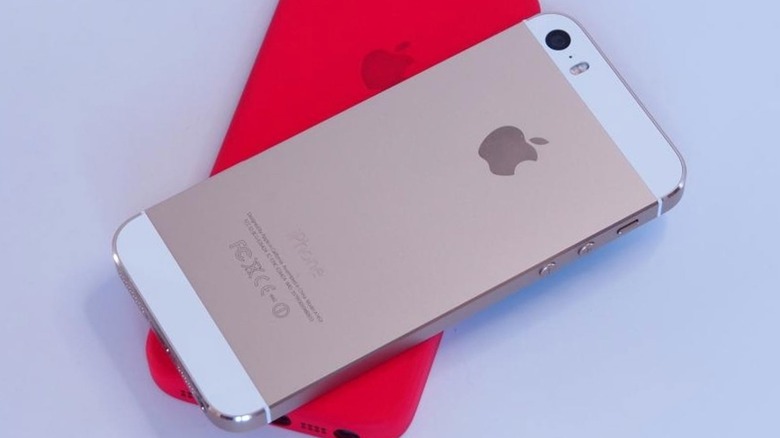
Despite being a hardcore Android fanboy, I cannot deny the fact that the iPhone 5S is among the most legendary phones ever launched. Right from that gorgeous design with chamfered edges to the iconic circular volume buttons, the iPhone 5S is still one of the most well-designed phones to date, in my opinion. In fact, I'm still holding onto an iPhone SE first-gen purely because it has the same chassis as the iPhone 5S. Apart from how beautiful it looks, the iPhone 5S had a few "firsts," making it an iconic device. For starters, the iPhone 5S was the first iPhone that shipped with a 64-bit processor. This was a landmark achievement, since it brought about massive improvements in performance and efficiency.
The new processor also introduced advanced features like TouchID, making the iPhone 5S the first iPhone with a fingerprint scanner for biometric authentication. These flagship features made the iPhone 5S extremely lucrative for Apple, as it led to massive sales during the launch week. I'm a huge fan of compact phones, which is why I adore the shape and size of the 5S; just the way the phone fits in my hand makes me wish Apple would make an updated version with modern specs. The iPhone 13 mini was probably the closest we got to that product, but it seems like most people don't appreciate small phones anymore. The iPhone 5S, for me, is the pinnacle of smartphone design.
OnePlus 3
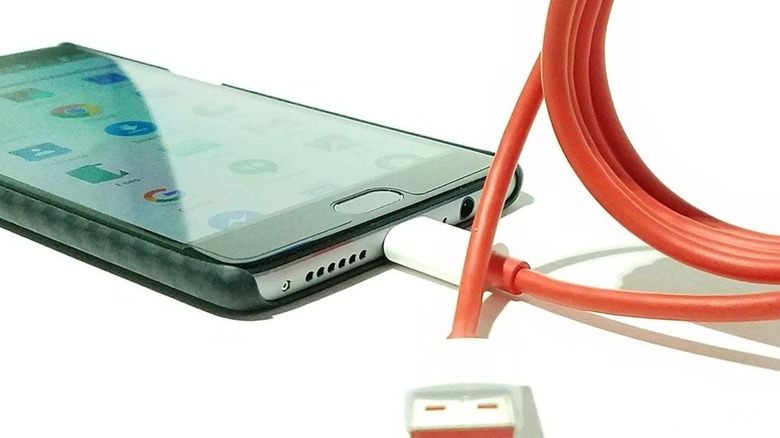
If you ask any smartphone reviewer to give you a list of their favorite phones, I can almost tell you for certain that the OnePlus One would be on it. For good reason, too, since the OnePlus One arguably revolutionized the affordable flagship segment. Great hardware, clean software, and at an unbeatable price. However, if there's one handset from the company that trumps the legacy of the OnePlus One, it's the OnePlus 3 — my favorite phone from the brand to date. While it didn't have the same aura as the OnePlus One, the OnePlus 3 was a massive improvement across several aspects. It fixed all the shortcomings of the OnePlus One and OnePlus 2, making it an extremely well-rounded flagship. The display was now AMOLED, the slow fingerprint scanner from the OnePlus 2 was replaced with a lightning-fast one, and the plastic back was now fully metal.
One aspect that stood out about the OnePlus 3 was its fast-charging capabilities. At a time when most brands used Qualcomm's Quick Charge technology to charge phones at a faster pace, OnePlus opted for a proprietary solution called Dash Charge. While 80-100W charging is now common among smartphones, OnePlus used 20W Dash Charging in 2016 to give the phone enough power to last a day by just plugging it in for 30 minutes. It wouldn't be an exaggeration to say that OnePlus pioneered today's fast-charging tech on smartphones, and the OnePlus 3 was the device that democratized it — and all for under $400.