

New Method For Repairing B-2 Bombers Saves The US Air Force Millions
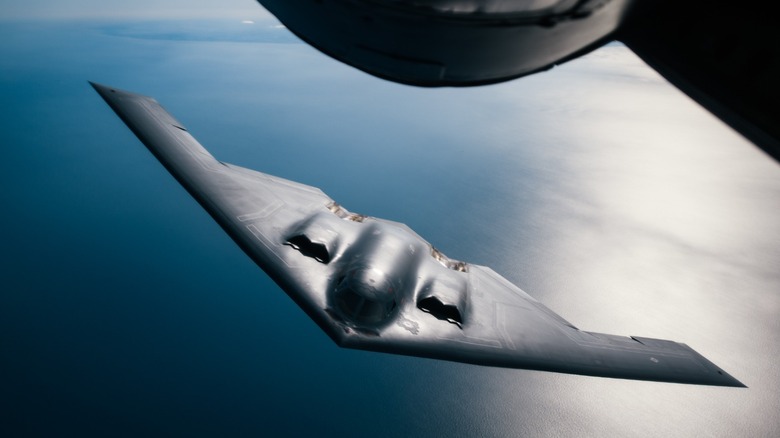
The Northrop B-2 Spirit is one of the United States Air Force's most well-known and fascinating aircraft. The heavy strategic bomber can fly to and drop ordnance on targets anywhere in the world, and it's been in operation since 1993. One of its most notable characteristics is its hefty price tag, costing American taxpayers a whopping $2.1 billion per aircraft, making the B-2 the most expensive military plane ever built. This is a primary reason only 21 of the planned 132 bombers were produced.
Of those, one was lost in a 2008 crash, while another was significantly damaged in a 2021 crash. When the damaged B-2 crashed in 2021, the Air Force made the call to retire it instead of repairing it, as the costs were too high to justify the expense. However, thanks to updates and upgrades made to the repair process, the damaged B-2, known as the Spirit of Georgia, has been returned to service.
This is a significant development, as the $2.1 billion aircraft was thought lost after its landing gear failed, causing widespread damage when it crash-landed. The aircraft was able to make a single flight to Northrop Grumman's Palmdale, California, facility in 2022 so repairs could begin, which ended up saving around $52 million in costs, reducing the repair schedule by nine months. The expensive, multiyear repair effort was carried out by the U.S. Air Force and Northrop Grumman, and it was one of the most challenging structural repairs in the fleet's history.
A reduced price tag made repairs of the Spirit of Georgia more economically palatable
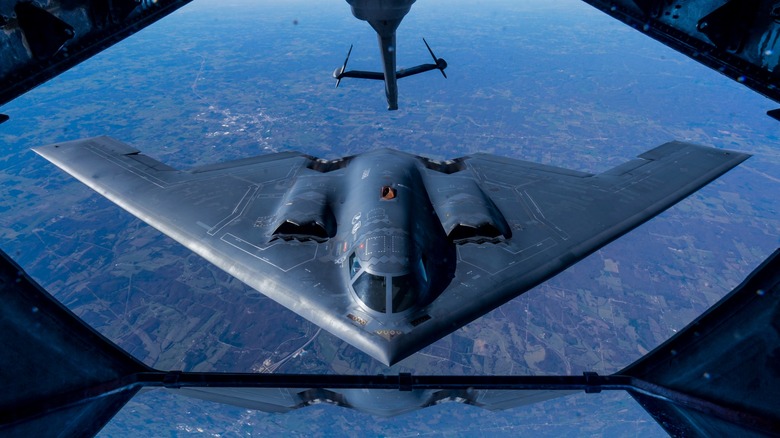
The Air Force originally based its decision to forego repairing the Spirit of Georgia on an estimated cost of over $100 million and a four-year repair schedule. While $100 million is a small fraction of the aircraft's total cost (4.76%), it's still a lot of money, so the decision made sense. Despite this, a call was made to repair the aircraft once the cost was factored down considerably. After the Spirit of Georgia made its potentially final flight to Palmdale, it was done in four phases: Design, test, validation, and structural restoration, which would be followed by airworthiness certification.
Not only was the schedule trimmed by nine months, but the total cost was reduced to $23.7 million, a reduction of more than 76%. Of course, this wasn't an easy task, as there were several technical challenges that needed to be overcome to repair the costly bomber. Time-consuming fabrication was cut down by utilizing a large composite skin panel from the B-2 Test Article 0998, a non-operational aircraft used for testing.
Other areas were replaced or repaired to reinforce structural integrity, which was completed in May 2025. One issue was fuel-tank contamination, so restoring composite surfaces required near laboratory-grade cleanliness, but the team managed it. These and other issues were overcome at significantly less cost and time than was initially presented. With the return of the Spirit of Georgia to the fleet, the Air Force once more has 20 operational B-2 aircraft, furthering the program for the years to come.
This isn't the first time a B-2 was completely restored
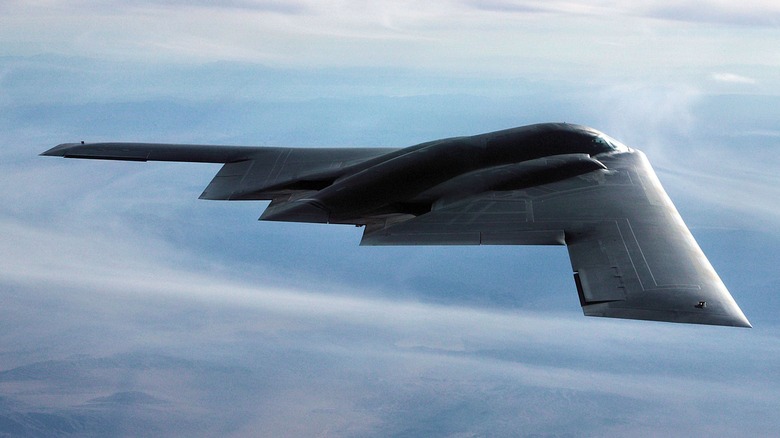
The cost and time projections on repairing the Spirit of Georgia weren't pulled out of a vacuum, as repairs were done previously on another aircraft. In 2010, a B-2 attempted to take off from Guam on a training mission, but a fireball flashed from the engine, destroying the interior of the bomber, though no one was injured. That aircraft, the Spirit of Washington, was completely destroyed from the inside, and repairing it was no easy task.
At the time, the Air Force was committed to maintaining its fleet of 20 B-2s, having lost one two years earlier, so repairs commenced in secret. Fixing the B-2 required over 1,000 parts, ranging in size from tiny clips to huge sections of structural support. The decision to repair the aircraft was explained by retired Gen. Norton A. Schwartz, the former Air Force chief of staff, who told the Los Angeles Times, "With only 20 B-2s — as precious as those aircraft are — no one even questioned whether or not we'd make the investment. When we found out the aircraft could be saved, civilian and military leadership agreed without hesitation."
It seems the same decision was made when the Spirit of Georgia was seemingly lost. It makes sense to keep these unique and extraordinarily expensive planes in operation, as the investment in their production, maintenance, and operation has been immense. The recent repair will likely be the last, as the B-2 is soon to be replaced by the highly specialized B-21 Raider, which is expected to enter the inventory in the mid-2020s.