

When Did Honda Start Using CVTs (And Are They Reliable?)
CVTs (continuously variable transmissions) often get a bad reputation. Any online gearhead will tell you CVTs are slow and unreliable. However, the bad reports are often overblown or unsubstantiated (for the most part). Most automakers across the spectrum of reliability offer some form of CVT in the lineup, the chief amongst reliable brands, Honda, has had a CVT in its repertoire since 1995 with the "Multi-Matic" transmission. It was, in turn, offered with the Honda Civic HX coupe, a car that managed to get 40 miles per gallon on the highway in the age before hybrids were popular. In Honda's current lineup, a CVT is standard on the HR-V, CR-V, the Civic, and the Accord.
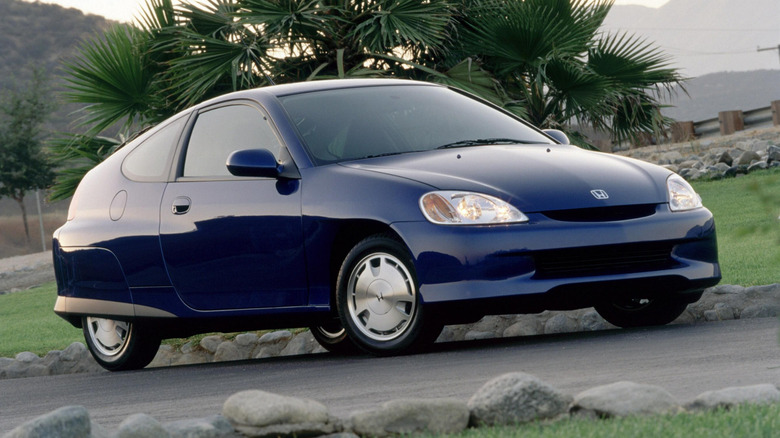
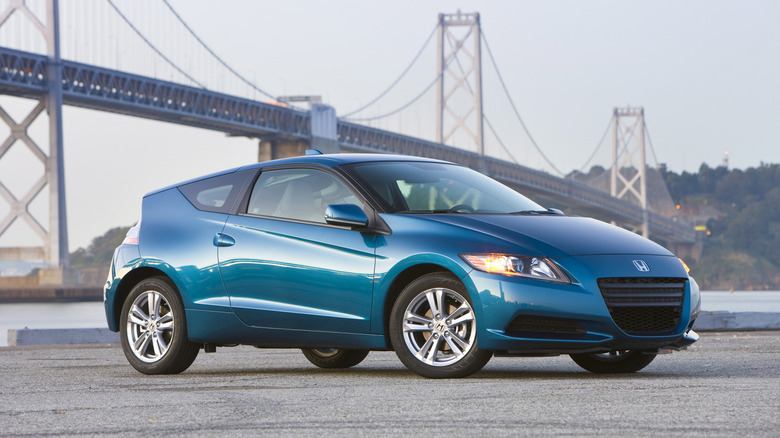
Historically, CVT has been present in MPG monsters like the Honda Insight since 2001, and the poster child for reliable commuting, the Honda Accord, since 2013. The funky Honda CR-Z hybrid even got the CVT treatment. Honda's had a CVT somewhere in a car for going on 30 years now, and the brand is still renowned for reliability and steadfastness, that's quite the endorsement of the technology.
Still, as with any other fast spinning piece of metal in a car, there are issues. It's just the law of the land (and thermodynamics). Taking a look at what actual owners say about their Hondas equipped with CVTs can give you a good snapshot as to the day-to-day reliability. But to answer the question outright: yes, Honda CVTs are reliable.
Keep up with maintenance to extend the life of your CVT
Users of Honda-centric forums don't exactly "love" CVTs per se, but most of the ire is directed towards the somewhat lethargic performance numbers. Let's face it, a Civic or Accord with a CVT is going to be a lot slower (and probably less fun to drive) than a Civic Si with a six-speed. However, when it comes to reliability, there are few complaints. Drivers report that newer CVTs are better and, most importantly, as long as you keep up with maintenance, you shouldn't face any major problems. For example, Honda recommends changing the transmission fluid of CVT-equipped seventh generation Honda Civics at 60,000 miles and once it hits 100,000 miles [PDF]. After that, Honda doesn't detail, but every 40,000-60,000 seems like the sweet spot.
Drivers on CR-V specific forums even report minimal issues, once again, as long as you keep up with maintenance and drive normally. No transmission, no matter how robust, will last long if you are stomping the accelerator at every stop light and driving like you're late to race in the Indianapolis 500.
So, yes, you can breathe a sigh of relief: Honda CVTs are generally reliable. You might not get absolutely stellar performance numbers, but your wallet will thank you as you get better fuel economy than a more conventional automatic transmission.